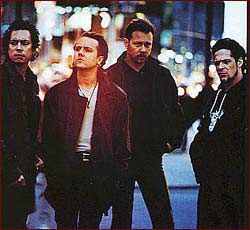
Jason Newstead - X Metallica

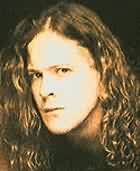 * Genre: Rock
* Active: '80s, '90s, 2000s
* Instrument: Bass, Guitar (Bass), Theremin
Biography
 Jason Curtis Newsted (born March 4, 1963 in
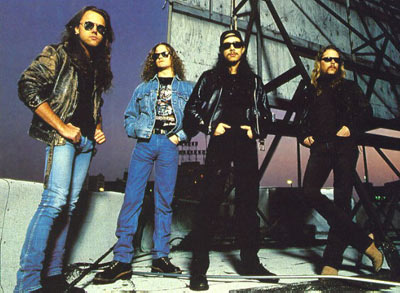
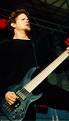 Bassist Jason Newsted may not have been an original member of Metallica, but he was present for the band's rise from the metal underground to the top of the charts worldwide from the late-'80s up to the dawn of the 21st century. Born on March 4, 1963, in
 In 1981, Newsted and a friend left
Flotsam was quickly moving up the ladder when Metallica (who had just released their most successful album yet, the classic Master of Puppets release) suffered the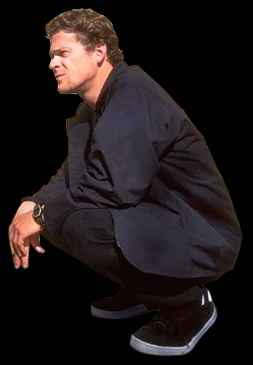 tragic death of bassist Cliff Burton mid-tour in September of 1986. Metallica decided to soldier on and began auditioning bass players to fill the void left by
 It wasn't until 1996 that the quartet would issue their next studio album, Load, but the group took some heat from longtime fans due to their new look (short hair, designer threads) and a more varied musical style that embraced other forms besides metal. But Load was another sizeable hit, as was its follow-up a year later, Reload. 1998 saw a compilation of cover tunes from over the years, Garage Inc., while 1999's symphonic metal experiment, S&M, was well received. Newsted had also found time to guest on other artist's recordings (Voivod's Phobos, Jim Martin's Milk & Blood, U.N.K.L.E.'s Psyence Fiction, and Sepultura's Against) and was set to launch a side-project titled Echo Brain in 2000, which appeared to cause some strife within Metallica -- confirmed by a tell-all interview by all four bandmembers in Playboy magazine in early 2001. Around the same time the aforementioned Playboy interview hit the stands, Newsted abruptly left Metallica, offering the statement, "Due to private and personal reasons, and the physical damage I've done to myself over the years while playing the music I love, I must step away from the band." ~ Greg Prato, All Music Guide
Jason left his previous band, Flotsam and Jetsam to join Metallica in 1986 after the tragic death of popular bassist Cliff Burton.
 During an evening of drinking, the three members of Metallica: James Hetfield, lead guitarist Kirk Hammett, and drummer Lars Ulrich reportedly came to a decision in the restroom of Tommy's Joynt in San Francisco amongst the urinals, and upon their return to the bar asked Jason to join Metallica. It was Ulrich who asked Newsted coolly: "Want a job?"
 After confirming Jason as their new bassist, Metallica constructed a cheap studio in Ulrich's garage in order to acclimate Jason to Metallica. In this studio, the band quickly recorded an album consisting completely of cover songs called The $5.98 EP: Garage Days Re-Revisited, an homage to the New Wave of British Heavy Metal bands that influenced them. Jason was often referred to by the nickname "Jason Newkid" and in autograph sessions Jason would sign his name and add "Bassface" below, often having the B marked out by one of the other band members.
 In 1988, the band recorded ...And Justice for All, Jason's official debut with Metallica. While the album contains classic Metallica songs such as "Blackened" (which Jason co-wrote), "One," and "Harvester of Sorrow", the bass guitar is all but non-existent, buried under layer upon layer of Hetfield's rhythm guitar tracks. Only a trained ear can make out many of the parts, although this can also be partially attributed to Jason's doubling of Hetfield's rhythm guitar parts (drummer Ulrich has challenged fans to find any instance in any song on the album in which Jason is not doubling the rhythm parts).
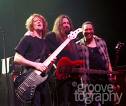 Jason withstood an ongoing series of practical jokes during the mammoth two-year Damaged Justice tour supporting ... Justice .... Some of his hazing experiences would include: being tricked into eating wasabi, the band members ordering alcoholic drinks and charging it to his hotel room and, mentioned during the 2001 Playboy interview [1], having his personal belongings getting thrown out of his hotel window. He said the hazing went from fraternity pranks (such as the autograph sessions mentioned above) to being downright cruel with turning down the bass in ...And Justice for All as an example. He felt that the hazing never stopped. Many fans who have come to his defense have cited this behavior among the evidence that he was never fully accepted as an equal member of the band.
He left Metallica in January 2001. He joined the Canadian metal band Voivod in 2002. The last song Jason played with Metallica was "Fade to Black" at the VH1 Music Awards and he knew at the time that it was going to be the last song he would play with the band.
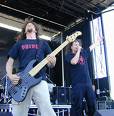 In the film Some Kind of Monster, Newsted claimed that he left Metallica because of James Hetfield's controlling desire to keep everyone in Metallica and out of side projects (specifically Echobrain, which Newsted desired to release an album and tour with). Ironically, in Echobrain's self-titled debut album, Kirk Hammett is credited with playing a solo on one track ("Suckerpunch"), without consequence from Hetfield. Jason also admitted that after 13 years, he still felt that his bandmates had not accepted him as an equal to his predecessor, Cliff Burton. He also said that the band's decision to hire a psychologist was, "really fucking lame. And weak."
 In 2003, Metallica picked former Ozzy Osbourne and Suicidal Tendencies bassist Robert Trujillo as Newsted's replacement. Jason was very happy with the decision Metallica made and in a bizarre twist, Ozzy immediately chose Jason to replace Rob for Ozzfest 2003. Following the end of Ozzfest, Jason left Ozzy's band to concentrate on his work with Voivod. Even though he isn't 100% happy with his relationship with Metallica, they are on better terms than they were immediately after his departure. He has said, "I'll be right there [at the concerts] cheering them on" on MTV Icon. However, after finding out the line up for the Summer Sanitarium Tour 2003, Newsted criticized Metallica for touring with pop-metal bands such as
In most recent news, Jason Newsted joined Mötley Crüe drummer Tommy Lee and former Guns N' Roses guitarist Gilby Clarke to form Supernova, a band that finalized its member lineup by selecting a lead singer in the competition style reality television show Rock Star. Supernova's first album is to be released just before the new band hits the road in 2007.
Style
 Like Lemmy Kilmister of Motörhead and many bassists in the Rock and Metal genres of music, Newsted favors playing pickstyle instead of his fingers. In Metallica's documentary A Year and a Half in the Life of Metallica he explained that while learning to play his first bass he had no amp. To make the sound audible, he played with a pick and used a very heavy downstroke that physically starts from his shoulder ("the movement comes from the shoulder and involves the whole arm" - Bass Player magazine Sept/Oct 1991, "Metallica Right-Hand Technique" by Jason Newsted, page 38) and not his wrist (as does most other pickstyle players), which led to not only his unique tone and sound but a strength and consistency in his right-hand picking technique which leads to Jason hitting the strings at the exact same area on every single stroke (Bass Player magazine Sept/Oct 1991, "Metallica's Jason Newstead - New Album, New Sound" pgs 30-39) .
 However, Newsted does use his fingers on occasion. The videos for "One", "King Nothing" and "Nothing Else Matters" show Jason using his fingers, and he also plays with his fingers on the fretless acoustic bass used for "The Unforgiven" from the aforementioned film. In addition to this, the video for the song "The Memory Remains" shows Jason playing fingerstyle and occasionally slapping his bass. Also, on the live DVD S&M, Jason can be seen playing fingerstyle on the song "- (Minus) Human," which was written a few years before the DVD was out on the street but previously unreleased (as well as "No Leaf Clover"). More recently he played fingerstyle while performing some of the Supernova original songs while on Rock Star Supernova
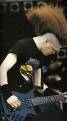 He is also known for his deep and throaty singing style. While in Metallica, he provided backing vocals to Hetfield and would even take entire verses from "Seek & Destroy", "Whiplash" and "Creeping Death" for himself to give Hetfield's voice a rest. His backing vocals have been met with both respect and criticism from fans; the respecting fans often cite this as one of the aspects of his departure from Metallica that is most missed.
Newsted is also noted for his energetic stage presence. Once described by Lars as a "energy bomb-of-a-person", Newsted would frequently run on stage, and headbang. He has stated in interviews that during some shows he would "Jack up his neck pretty bad" and "couldn't play for a few minutes." He has since attempted to remedy this problem by using lighter basses and Newsted occasionally headbangs to this day, years after leaving Metallica.
Rock Star: Supernova
In July 2006 Jason joined the band Supernova that is seeking a singer for the new band. The other band members are Gilby Clarke (guitar), and Tommy Lee (drums). The band selected Lukas Rossi to be their lead singer on September 13, 2006 on the television show Rock Star: Supernova.
On October 23rd, 2006 Newsted injured his shoulder while attempting to catch a falling bass amp head. He is scheduled for immediate surgery, and will then undergo a lengthy rehab process that could detain him for up to nine months. The band is searching for a temporary replacement for their upcoming tour. [2]
Discography
* Flotsam and Jetsam
o 1986 Doomsday for the Deceiver
* Metallica
o 1987 Garage Days Re-Revisited
o 1988 ...And Justice for All
o 1991 Metallica
o 1993 Live Shit: Binge & Purge
o 1996 Load
o 1997 Reload
o 1998 Garage Inc.
o 1999 S&M
* Sepultura
o 1998 Against (guest)
* UNKLE
o 1998 Psyence Fiction (guest)
* Voivod
o 1998 Phobos (guest)
o 2003 Voivod
o 2006 Katorz
* Echobrain
o 2002 Echobrain
* Papa Wheelie
o 2002 Unipsycho
o 2002 Live Lycanthropy
* IR8/Sexoturica
o 2002 IR8 vs. Sexoturica
* Moss Brothers
o 2001 Electricitation
DVD & Video
* Metallica
o 1989 2 of One
o 1992 A Year and a half in the life of Metallica
o 1993 Live Shit: Binge & Purge
o 1998 Cunning Stunts
o 1999 S&M
o 2004 Some Kind Of Monster
o 2006 The Videos 1989-2004