


Showing posts with label Metallica. Show all posts
Showing posts with label Metallica. Show all posts


Metallica
 * Born: 1981
* Birthplace:
* Best Known As: The heavy metal band who did "Enter Sandman"
Metallica is an American heavy metal band, formed October 28, 1981.United States
After building a loyal following by helping to develop modern heavy metal, especially thrash metal (Metallica is the most successful of the "big four" of thrash metal, which include Megadeth, Slayer, and Anthrax) in the mid-1980s, the band broadened its audience in the early 1990s.
In 2003 Metallica released their long-delayed 8th studio album, entitled St. Anger. Although the album polarized critical and popular opinion, their 2004 Madly in Anger with the World supporting tour was a success, and a documentary of the recording of the album during a time of internal turmoil, Some Kind of Monster, was a critical success.
 Metallica dominated heavy metal music in the 1980s and 1990s, emerging as one of the top musical acts in history by the end of the century. Drummer Lars Ulrich (26 December 1963) and guitarist James Hetfield (3 August 1963) started the band in 1981. After a few line-up changes (including guitarist Dave Mustaine, who left in 1982 to form Megadeath), the band released Kill 'Em All in 1983 and toured the
History
Early days (1981-1985)
Metallica was formed in
 Metallica got its name when San Francisco-area metal promoter Ron Quintana asked Ulrich to help pick out a name for his new magazine to promote
Biography
 Metallica was easily the best, most influential heavy metal band of the '80s, responsible for bringing the music back to Earth. Instead of playing the usual rock star games of metal stars of the early '80s, the band looked and talked like they were from the street. Metallica expanded the limits of thrash, using speed and volume not for their own sake, but to enhance their intricately structured compositions. The release of 1983's Kill 'Em All marked the beginning of the legitimization of heavy metal's underground, bringing new complexity and depth to thrash metal. With each album, the band's playing and writing improved; James Hetfield developed a signature rhythm playing that matched his growl, while lead guitarist Kirk Hammett became one of the most copied guitarists in metal. Lars Ulrich's thunderous, yet complex, drumming clicked in perfectly with Cliff Burton's innovative bass playing. After releasing their masterpiece Master of Puppets in 1986, tragedy struck the band when their tour bus crashed while traveling in
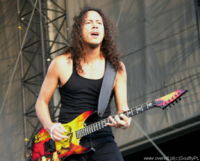 The band spent most of 2000 embroiled in controversy by spearheading a legal assault on Napster, a file-sharing service that allowed users to download music files from each other's computers. Aggressively targeting copyright infringement of their own material, the band notoriously had over 300,000 users kicked off the service, creating a widespread debate over the availability of digital music that raged for most of the year. In January 2001, bassist Jason Newsted announced his amicable departure from the band. Shortly after the band appeared at the ESPN awards in April of the same year, Hetfield, Hammett, and Ulrich entered the recording studio to begin work on their next album, with producer Bob Rock lined up to handle bass duties for the sessions (with rumors of former Ozzy Osbourne/Alice in Chains bassist Mike Inez being considered for the vacated position). In July, Metallica surprisingly dropped their lawsuit against Napster, perhaps sensing that their controversial stance did more bad than good to their "band of the people" image. In late summer 2001, the band's recording sessions (and all other band-related matters) were put on hold as Hetfield entered an undisclosed rehab facility for alcoholism and other addictions. He completed treatment and rejoined the band and they headed back into the studio in 2002 to record St. Anger, released in mid-2003. The recording of St. Anger was capped with the search for a permanent replacement for Newstead. After a long audition process, former Ozzy Osbourne/Suicidal Tendencies bass player Robert Trujillo was selected and joined Metallica for their 2003/2004 world tour. The growing pains the band experienced during the recording process of St. Anger were captured in the celebrated documentary Some Kind of Monster which saw theatrical release in 2004. ~ Stephen Thomas Erlewine & Greg Prato
In early 1982, Metallica recorded "Hit the Lights" for the first Metal Massacre compilation. Desperate for a full time lead guitarist, Ulrich posted an advert in a local newspaper. Dave Mustaine from
A few months later the band recorded a full demo, No Life 'Til Leather, which quickly drew attention on the underground tape trading circuit. After conflicts with Mustaine, McGovney left the band and was replaced by Cliff Burton from
When the group arrived in
Metallica then travelled to
 Metallica released its first album, Kill 'Em All (1983) on Megaforce. The album set the template that they would follow throughout the 1980s, featuring Hetfield's heavy vocals and aggressive rhythm guitar. The album did not have huge initial sales, but consolidated their loyal fan base in the growing underground metal scene. A year later, Metallica released their Ride the Lightning (1984), adding complexity and further melodic flair to the thrash metal of their debut. Longer songs showcased lyrical and musical growth, like "Fade to Black", a slower, more introspective song, or an ode to hoplessness and death, that some thought reflected the thoughts of someone contemplating suicide. The song in fact was written after the band's equipment was stolen (most notably a
Mainstream success (1986-1994)
 Metallica signed a major label deal with Elektra Records in 1984, and released Master of Puppets (1986). Many fans regard the album as the band's finest work, and some consider it to be the greatest heavy metal album of all time. Despite the fact that no singles were released for the album, the band received some minor airplay from album tracks "Master of Puppets" and "Welcome Home (Sanitarium)". The album charted at number 29 on the Billboard Top Album Charts.
On September 27, 1986, during a European leg of shows, Burton was killed near Ljungby, Sweden, when Metallica's tour bus skidded off an icy road and flipped over. Burton was thrown out of the window, and the bus landed on top of him. It is uncertain if

 Jason Newsted, formerly of Flotsam and Jetsam officially joined Metallica on October 28, 1986, three weeks after
...And Justice for All (1988), the first studio album since
 Although the song-writing was praised, the production of this album was heavily criticized as Lars Ulrich's drums clicked more than thudded and the guitars had a thin sound. The Damaged Justice tour followed. However, over time, because of the complexity and length of the songs, the band would later cease to play most of them live (though several songs, most notably "One", would remain a constant in the group's live performances).
In 1989, Metallica received its first Grammy nomination for the album ...And Justice for All for Best Hard Rock/Metal Performance Vocal or Instrument. However, in one of the most misunderstood Grammy decisions to date, the award was given to Jethro Tull for the album Crest of a Knave. The result generated much controversy, as Metallica was widely expected to take home the award, and was standing off-stage waiting to receive it after performing the song "One" for the telecast. Lars Ulrich even referenced the snub in accepting a Grammy for "One" the following year, stating, "We gotta thank Jethro Tull for not putting out an album this year."
The album also contained their last instrumental to date, "To Live Is To Die", which was a sort of tribute to Cliff Burton because it contained some of
It was during this time the band embraced the mainstream music world with their first ever music video. Ironically, they would choose the song "One", a song based upon the controversial World War I-themed anti-war novel "Johnny Got His Gun",written by Dalton Trumbo.
For the video, the band performed the song in an abandoned warehouse. The performance was then extensively "remixed" with footage of the film version of Johnny Got His Gun. The end result featured a coherent but shortened "mini-movie" version of "Johnny Got His Gun", with an intricate level of synchronization between the song and the film's dialogue, creating a singular narrative between the two.
The "remix" video was submitted to MTV, with the alternate "performance only" version held back in the event that MTV would ban the remix version. MTV accepted the remix version and despite its length (the video ran for nearly ten minutes) put the video in heavy rotation.[citation needed] The video would be many viewers first exposure to Metallica and was voted the #25 in the fall of 1999, when MTV aired its last "Top 100 Videos of All Time" countdown, and was prominently featured during MTV's 25th Anniversary edition of "ADD Video", which showcased the top videos to air on MTV in the last 25 years.
In 1991, the self-titled album, Metallica (popularly known as The Black Album by fans) saw the band reaching out to a wider audience. The record was co-produced with Bob Rock, whose resume included work with hard rock acts The Cult, Bon Jovi, Mötley Crüe, and many others. The album featured a black cover that evoked humorous comparisons to Spinal Tap. The majority of the making of the Metallica album and the following tour was documented in A Year and a Half in the Life of Metallica. The recording sessions were a long and arduous process, lasting over a year due to infighting among the band's members and endless arguments with Rock about the album's direction, scope, and sound. The cost of recording the album was reputed to be over $1 million.[citation needed] However, despite the battle to finish the album, it quickly became the band's most successful release, charting at number one on the Billboard charts.
The album featured the hit "Enter Sandman", which exemplified the radically pared-down style of songwriting across the album; it became one of Metallica's best-known songs and has been used extensively at sporting events. Another hit was "Nothing Else Matters", a more plaintive, acoustic ballad that outraged some fans but secured the album as a massive crossover hit and brought Metallica firmly into the mainstream. The intro to the track "Don't Tread on Me" pastiches Leonard Bernstein's "
This album had been preceded by a cover of Queen's "Stone Cold Crazy" which was contributed to Rubáiyat, a compilation album commemorating Elektra's 40th anniversary, and which Hetfield, together with Queen's remaining band members, performed live at The Freddie Mercury Tribute Concert. Metallica also played a set at the concert.
 Charges of selling out would be aimed at Metallica throughout the 1990s, to which the band often joked that they did indeed sell out — each and every date of the tour. Indeed, the Wherever We May Roam tour following The Black Album was especially successful and eventful. Many dates were held with no opening act, instead showing an introductory film that included unused interview footage from A Year and a Half..., and other footage of band members' antics backstage. The best-known incident during this tour was a pyrotechnics accident in 1992 in
Load era (1995-1999)
 After almost three years of touring to support The Black Album, during which time the trek was relabelled the Nowhere Else to Roam Tour, Metallica took a respite until late 1995. On December 13, they recorded during their rehearsal for Lemmy Kilmister's 50th birthday party; four Motörhead covers were later released as a two-part limited edition CD single. The band spent around a year writing and recording new songs, resulting in Load (1996). At one point during early production, Load was intended to be a double album. Ultimately, it was decided that it would be best to release half of the songs first, and continue to work on the remaining songs and release them the following year. This resulted in the follow up album ReLoad (1997). Some songs written during Load were changed by the time they were recorded for ReLoad; in particular, "Fuel" had different lyrics than the version played during the Load Tour, as evidenced by the version played on the Cunning Stunts concert film (the song was then-titled "Fuel for Fire").
 These albums represented a significant musical change for Metallica. The band's breakneck metal tempos and layered guitar compositions had largely been replaced by bluesy guitar tones, slide guitar and shuffle rhythms. Hetfield's vocals took a larger role than ever before, and several songs (such as "Mama Said" and "Low Man's Lyric"), and showed the band's willingness to experiment with varied sounds and instruments. These changes included the use of the steel guitar (commonly used in country music) in "Mama Said" (this is not supported by Kirk Hammett, who in a Guitar Player interview claimed it's not pedal steel guitar on "Load", but an electric guitar processed to emulate one), as well as the use of the hurdy-gurdy and violin in "Low Man's Lyric".
Many of the changes on Load and ReLoad had been anticipated by earlier experiments (especially on The Black Album), but listeners generally regard the two albums as the band's turning point. Sales were lower than sales of the previous three albums. Many songs from Load and ReLoad received extensive radio play, including "Until It Sleeps", "Hero of the Day", "King Nothing", "The Memory Remains", "The Unforgiven II", and "Fuel".
Hetfield noted later in the documentary film Some Kind of Monster that many songs on these two albums were initially thought by the band to be of only average quality, and polished and re-worked repeatedly until judged to be releasable.
By 1996, all of the band members had cut their hair (although Hammett eventually grew it back), which was ridiculed by many, including band friends Alice in Chains, whose edition of MTV's Unplugged featured, on Mike Inez's bass, the words "friends don't let friends get Friends haircuts." Metallica were in the audience for the taping of the show.
In 1998 Metallica compiled a double CD called Garage Inc.. The first CD contained newly recorded covers, ranging from obvious Metallica influences such as The Misfits, Thin Lizzy, Mercyful Fate and Black Sabbath to more unexpected choices like Nick Cave and Bob Seger (the band's cover of Seger's "Turn the Page" garnered extensive radio airplay). The second CD gathered together previously released covers, including the original The $5.98 E.P.: Garage Days Re-Revisited, which had become a scarce collectors' item. The CD also included B-side covers going as far back as 1984.
 On March 7, 1999, Metallica were inducted into the San Francisco Walk of Fame. The mayor of
Napster controversy (2000-2001)
In 2000, Metallica discovered that a demo of their song "I Disappear" was being distributed via the Napster P2P file-sharing network. Not only was the song unfinished, it was supposed to be released in combination with the
They soon discovered that in addition to the demo, their entire catalogue was also freely available. The band initiated legal action against Napster and, in the process, demanded that 300,000 Napster users found to be trading Metallica songs be banned from the network. Legal actions were also started against
The lawsuit created a public relations nightmare. Throughout the controversy, many websites hosted cartoon parodies of band members, portraying them as selfish rock stars who were out of touch with their fans. The most popular of these was a cartoon parody entitled Napster Bad!, by
Metallica, like a number of other bands, refused to sell their music on iTunes for a number of years. They finally ended this holdout on Tuesday, July 25, 2006, although only in the
Newsted's Departure (2001-2003)
As plans were being made to go into the recording studio in 2001, Newsted left the band, ostensibly due to "the physical damage I have done to myself over the years while playing the music that I love." However, subsequent interviews with Newsted and the remaining members revealed that Newsted's desire to release a CD and tour with his Echobrain side-project – and Hetfield's intense resistance to such an idea – was the primary cause of Newsted's departure, as Hetfield believed a release by an individual band member would somehow weaken the band. The 2004 documentary Some Kind of Monster provided more insight into the reasons for Newsted's departure. In the film he says he felt Metallica's desire to hire a therapist to help solve the problems between the band members was "fucking lame and weak".
This would be the first in a series of low-points the band would endure. In July, 2001, Hetfield entered rehab due to "alcoholism and other addictions". For nearly a year, Metallica ceased to function in any meaningful way. Ulrich and Hammett, for the first time, seriously considered the possibility that Metallica might be finished. Hetfield eventually returned to the band following his rehab hiatus. Slowly and cautiously Metallica continued as a 3-piece throughout the writing and recording of their next album. Longtime producer Bob Rock handled bass duties for the sessions.
Metallica held auditions for Newsted's permanent replacement in early 2003. Robert Trujillo formerly of Suicidal Tendencies, and Ozzy Osbourne's band, was chosen as the new bassist. Robert's resume also included Infectious Grooves as well as a stint with Black Label Society on their Boozed, Broozed, and Broken-Boned DVD. As Metallica moved on, Jason Newsted also found a new musical home joining Canadian thrash metal legends Voivod in 2002. In an interesting turn of events, Jason became Robert's replacement in Ozzy's band during the 2003 Ozzfest tour (which included Voivod as part of the touring bill).
St. Anger (2003-2004)
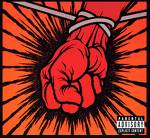 In June 2003, Metallica's eighth full-length, St. Anger, debuted at number one on the album charts. Though it was an intentionally raw and unpolished album, harsh criticism from fans followed. The record's under-produced sound, Hetfield's "flexible" sense of pitch, Ulrich's new signature steel snare drum and no guitar solos received particular criticism. The album won best metal performance at the 2004 Grammys, the band's seventh such award. The documentary Some Kind of Monster followed the album and offered an inside view into the daily affairs of Metallica as never before. While the film focused on the growing tensions within the band, it fulfilled its original purpose of helping to promote the album. The film also exposed to fans that Metallica had sought the guidance of a therapist, Phil Towle, to deal with a vast amount of the band's inner turmoil.
Having toured extensively for two years with Godsmack in support of St. Anger on first the brief Summer Sanitarium Tour 2003 in festivals and then the lengthy Madly in Anger with the World tour (in which nearly every performance was professionally recorded and sold on LiveMetallica.com) Metallica took a break from performing and spent most of 2005 with friends and family.
Escape From the Studio '06 Tour and The New Album (2005-Present)
On February 16 2006, Metallica announced on their official website, that after their 15+ year relationship, longtime producer Bob Rock has stepped down from recording Metallica's next studio album. Rock had produced every Metallica album since 1991, beginning with Metallica. Metallica is working on a studio album with legendary producer Rick Rubin known for his work with, among numerous others, Slayer and
Metallica debuted an untitled song nicknamed "The New Song" in
It was during this time on tour that the band finally bowed to fan pressure decided to make each of their albums available at the iTunes Store - though strictly in the
On October 13, 2006 Metallica announced that they will release a DVD containing all their videos from 1989 to 2004. The DVD will be called The Videos 1989-2004 and it will be released on December 4, 2006 worldwide and on December 5 in
Other appearances
* James Hetfield and Lars Ulrich contributed their voices to the Disney cartoon "Dave the Barbarian" in an episode titled "Here There Be Dragons", which aired February 27, 2004.
* James Hetfield lended his voice in the movie "
* On September 20, 2005, Metallica went to the studio to record their voice parts for their appearance in an episode of The Simpsons. The episode was named The Mook, the Chef, the Wife and Her Homer and it was the first of Season 18, being aired in the
* James Hetfield and Kirk Hammett have recorded guest voices for Adult Swim's new show "Metalocalypse".
* Metallica played two shows with The Rolling Stones in their hometown of
* Metallica played their first shows on the African continent March 18-25, 2006, at the Coca-Cola Co-lab Massive Mix in
* The band made an appearance in the independent film The Darwin Awards and played at its Sundance Film Festival private party premiere on January 25, 2006.[citation needed]
* On March 13, 2006 Metallica inducted Black Sabbath into the Rock and Roll Hall of Fame and played "Iron Man" and "Hole in the Sky". The ceremony was aired on VH1, March 21, 2006.
* Throughout the entire 2006 tour, Metallica has performed Master of Puppets in its entirety to celebrate the album's twentieth anniversary of release. These performances mark the only full renditions of "Orion" since
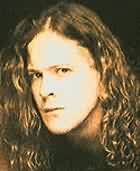
Jason Newstead - X Metallica

 * Genre: Rock
* Active: '80s, '90s, 2000s
* Instrument: Bass, Guitar (Bass), Theremin
Biography
 Jason Curtis Newsted (born March 4, 1963 in
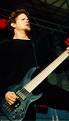 Bassist Jason Newsted may not have been an original member of Metallica, but he was present for the band's rise from the metal underground to the top of the charts worldwide from the late-'80s up to the dawn of the 21st century. Born on March 4, 1963, in
 In 1981, Newsted and a friend left
Flotsam was quickly moving up the ladder when Metallica (who had just released their most successful album yet, the classic Master of Puppets release) suffered the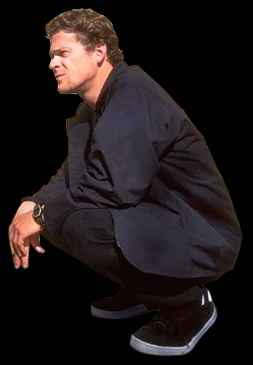 tragic death of bassist Cliff Burton mid-tour in September of 1986. Metallica decided to soldier on and began auditioning bass players to fill the void left by
 It wasn't until 1996 that the quartet would issue their next studio album, Load, but the group took some heat from longtime fans due to their new look (short hair, designer threads) and a more varied musical style that embraced other forms besides metal. But Load was another sizeable hit, as was its follow-up a year later, Reload. 1998 saw a compilation of cover tunes from over the years, Garage Inc., while 1999's symphonic metal experiment, S&M, was well received. Newsted had also found time to guest on other artist's recordings (Voivod's Phobos, Jim Martin's Milk & Blood, U.N.K.L.E.'s Psyence Fiction, and Sepultura's Against) and was set to launch a side-project titled Echo Brain in 2000, which appeared to cause some strife within Metallica -- confirmed by a tell-all interview by all four bandmembers in Playboy magazine in early 2001. Around the same time the aforementioned Playboy interview hit the stands, Newsted abruptly left Metallica, offering the statement, "Due to private and personal reasons, and the physical damage I've done to myself over the years while playing the music I love, I must step away from the band." ~ Greg Prato, All Music Guide
Jason left his previous band, Flotsam and Jetsam to join Metallica in 1986 after the tragic death of popular bassist Cliff Burton.
 During an evening of drinking, the three members of Metallica: James Hetfield, lead guitarist Kirk Hammett, and drummer Lars Ulrich reportedly came to a decision in the restroom of Tommy's Joynt in San Francisco amongst the urinals, and upon their return to the bar asked Jason to join Metallica. It was Ulrich who asked Newsted coolly: "Want a job?"
 After confirming Jason as their new bassist, Metallica constructed a cheap studio in Ulrich's garage in order to acclimate Jason to Metallica. In this studio, the band quickly recorded an album consisting completely of cover songs called The $5.98 EP: Garage Days Re-Revisited, an homage to the New Wave of British Heavy Metal bands that influenced them. Jason was often referred to by the nickname "Jason Newkid" and in autograph sessions Jason would sign his name and add "Bassface" below, often having the B marked out by one of the other band members.
 In 1988, the band recorded ...And Justice for All, Jason's official debut with Metallica. While the album contains classic Metallica songs such as "Blackened" (which Jason co-wrote), "One," and "Harvester of Sorrow", the bass guitar is all but non-existent, buried under layer upon layer of Hetfield's rhythm guitar tracks. Only a trained ear can make out many of the parts, although this can also be partially attributed to Jason's doubling of Hetfield's rhythm guitar parts (drummer Ulrich has challenged fans to find any instance in any song on the album in which Jason is not doubling the rhythm parts).
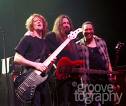 Jason withstood an ongoing series of practical jokes during the mammoth two-year Damaged Justice tour supporting ... Justice .... Some of his hazing experiences would include: being tricked into eating wasabi, the band members ordering alcoholic drinks and charging it to his hotel room and, mentioned during the 2001 Playboy interview [1], having his personal belongings getting thrown out of his hotel window. He said the hazing went from fraternity pranks (such as the autograph sessions mentioned above) to being downright cruel with turning down the bass in ...And Justice for All as an example. He felt that the hazing never stopped. Many fans who have come to his defense have cited this behavior among the evidence that he was never fully accepted as an equal member of the band.
He left Metallica in January 2001. He joined the Canadian metal band Voivod in 2002. The last song Jason played with Metallica was "Fade to Black" at the VH1 Music Awards and he knew at the time that it was going to be the last song he would play with the band.
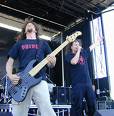 In the film Some Kind of Monster, Newsted claimed that he left Metallica because of James Hetfield's controlling desire to keep everyone in Metallica and out of side projects (specifically Echobrain, which Newsted desired to release an album and tour with). Ironically, in Echobrain's self-titled debut album, Kirk Hammett is credited with playing a solo on one track ("Suckerpunch"), without consequence from Hetfield. Jason also admitted that after 13 years, he still felt that his bandmates had not accepted him as an equal to his predecessor, Cliff Burton. He also said that the band's decision to hire a psychologist was, "really fucking lame. And weak."
 In 2003, Metallica picked former Ozzy Osbourne and Suicidal Tendencies bassist Robert Trujillo as Newsted's replacement. Jason was very happy with the decision Metallica made and in a bizarre twist, Ozzy immediately chose Jason to replace Rob for Ozzfest 2003. Following the end of Ozzfest, Jason left Ozzy's band to concentrate on his work with Voivod. Even though he isn't 100% happy with his relationship with Metallica, they are on better terms than they were immediately after his departure. He has said, "I'll be right there [at the concerts] cheering them on" on MTV Icon. However, after finding out the line up for the Summer Sanitarium Tour 2003, Newsted criticized Metallica for touring with pop-metal bands such as
In most recent news, Jason Newsted joined Mötley Crüe drummer Tommy Lee and former Guns N' Roses guitarist Gilby Clarke to form Supernova, a band that finalized its member lineup by selecting a lead singer in the competition style reality television show Rock Star. Supernova's first album is to be released just before the new band hits the road in 2007.
Style
 Like Lemmy Kilmister of Motörhead and many bassists in the Rock and Metal genres of music, Newsted favors playing pickstyle instead of his fingers. In Metallica's documentary A Year and a Half in the Life of Metallica he explained that while learning to play his first bass he had no amp. To make the sound audible, he played with a pick and used a very heavy downstroke that physically starts from his shoulder ("the movement comes from the shoulder and involves the whole arm" - Bass Player magazine Sept/Oct 1991, "Metallica Right-Hand Technique" by Jason Newsted, page 38) and not his wrist (as does most other pickstyle players), which led to not only his unique tone and sound but a strength and consistency in his right-hand picking technique which leads to Jason hitting the strings at the exact same area on every single stroke (Bass Player magazine Sept/Oct 1991, "Metallica's Jason Newstead - New Album, New Sound" pgs 30-39) .
 However, Newsted does use his fingers on occasion. The videos for "One", "King Nothing" and "Nothing Else Matters" show Jason using his fingers, and he also plays with his fingers on the fretless acoustic bass used for "The Unforgiven" from the aforementioned film. In addition to this, the video for the song "The Memory Remains" shows Jason playing fingerstyle and occasionally slapping his bass. Also, on the live DVD S&M, Jason can be seen playing fingerstyle on the song "- (Minus) Human," which was written a few years before the DVD was out on the street but previously unreleased (as well as "No Leaf Clover"). More recently he played fingerstyle while performing some of the Supernova original songs while on Rock Star Supernova
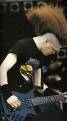 He is also known for his deep and throaty singing style. While in Metallica, he provided backing vocals to Hetfield and would even take entire verses from "Seek & Destroy", "Whiplash" and "Creeping Death" for himself to give Hetfield's voice a rest. His backing vocals have been met with both respect and criticism from fans; the respecting fans often cite this as one of the aspects of his departure from Metallica that is most missed.
Newsted is also noted for his energetic stage presence. Once described by Lars as a "energy bomb-of-a-person", Newsted would frequently run on stage, and headbang. He has stated in interviews that during some shows he would "Jack up his neck pretty bad" and "couldn't play for a few minutes." He has since attempted to remedy this problem by using lighter basses and Newsted occasionally headbangs to this day, years after leaving Metallica.
Rock Star: Supernova
In July 2006 Jason joined the band Supernova that is seeking a singer for the new band. The other band members are Gilby Clarke (guitar), and Tommy Lee (drums). The band selected Lukas Rossi to be their lead singer on September 13, 2006 on the television show Rock Star: Supernova.
On October 23rd, 2006 Newsted injured his shoulder while attempting to catch a falling bass amp head. He is scheduled for immediate surgery, and will then undergo a lengthy rehab process that could detain him for up to nine months. The band is searching for a temporary replacement for their upcoming tour. [2]
Discography
* Flotsam and Jetsam
o 1986 Doomsday for the Deceiver
* Metallica
o 1987 Garage Days Re-Revisited
o 1988 ...And Justice for All
o 1991 Metallica
o 1993 Live Shit: Binge & Purge
o 1996 Load
o 1997 Reload
o 1998 Garage Inc.
o 1999 S&M
* Sepultura
o 1998 Against (guest)
* UNKLE
o 1998 Psyence Fiction (guest)
* Voivod
o 1998 Phobos (guest)
o 2003 Voivod
o 2006 Katorz
* Echobrain
o 2002 Echobrain
* Papa Wheelie
o 2002 Unipsycho
o 2002 Live Lycanthropy
* IR8/Sexoturica
o 2002 IR8 vs. Sexoturica
* Moss Brothers
o 2001 Electricitation
DVD & Video
* Metallica
o 1989 2 of One
o 1992 A Year and a half in the life of Metallica
o 1993 Live Shit: Binge & Purge
o 1998 Cunning Stunts
o 1999 S&M
o 2004 Some Kind Of Monster
o 2006 The Videos 1989-2004
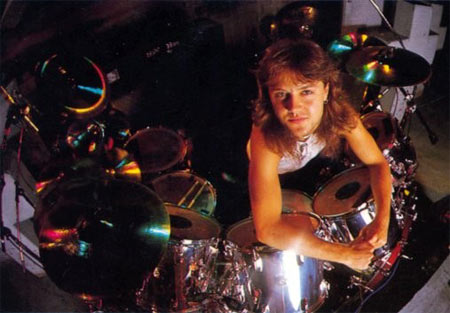
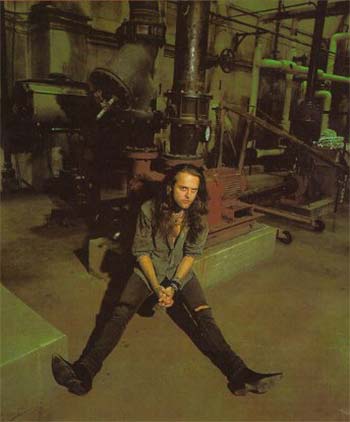
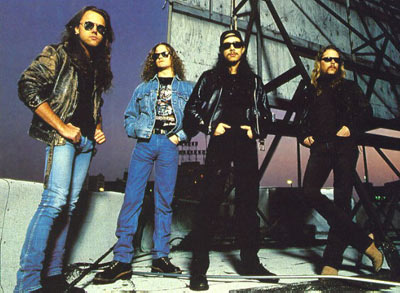
Lars Ulrich - METALLICA

 Lars Ulrich (born December 26, 1963) is the drummer and founder of Metallica. He was born in
Besides being one of Metallica's founding members and main songwriters, drummer Lars Ulrich is also the band's spokesman. Born on December 26, 1963, in Gentofte, Denmark, Ulrich's father (Torbin Ulrich) was a nationally renowned tennis player, and it appeared as though Lars would follow in his father's footsteps, as the young Ulrich practiced hard on tennis skills. In 1973, his father took Lars to his first rock concert, to see the mighty Deep Purple in Copenhagen, which opened the youngster's eyes to hard rock and heavy metal. After he decided that the tennis life wasn't for him after all, Ulrich shifted his focus on music (namely the New Wave of British Heavy Metal movement: Iron Maiden, Saxon, Diamond Head, Motorhead, Def Leppard, etc.), and took up the drums. His family relocated to California in the early '80s, as Lars promptly put an ad in the local music paper looking for other similarly minded musicians looking to start up a band (even though the NWOBHM had yet to make an impression stateside). One of the first replies he received was from guitarist James Hetfield, as the pair agreed that they should form a band that was a reaction against the glam metal that had infiltrated Los Angeles at the time. Soon after, Metallica was officially born.
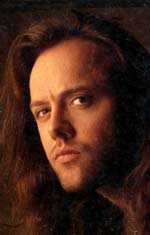 26, 1963, in Gentofte, Denmark, Ulrich's father (Torbin Ulrich) was a nationally renowned tennis player, and it appeared as though Lars would follow in his father's footsteps, as the young Ulrich practiced hard on tennis skills. In 1973, his father took Lars to his first rock concert, to see the mighty Deep Purple in Copenhagen, which opened the youngster's eyes to hard rock and heavy metal. After he decided that the tennis life wasn't for him after all, Ulrich shifted his focus on music (namely the New Wave of British Heavy Metal movement: Iron Maiden, Saxon, Diamond Head, Motorhead, Def Leppard, etc.), and took up the drums. His family relocated to California in the early '80s, as Lars promptly put an ad in the local music paper looking for other similarly minded musicians looking to start up a band (even though the NWOBHM had yet to make an impression stateside). One of the first replies he received was from guitarist James Hetfield, as the pair agreed that they should form a band that was a reaction against the glam metal that had infiltrated Los Angeles at the time. Soon after, Metallica was officially born.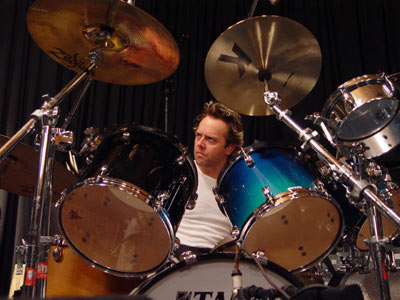
Several other bandmembers came and went, until a lineup consisting of bassist Cliff Burton, lead guitarist Dave Mustaine, plus Ulrich and Hetfield (the latter also doubling on vocals by this time) moved to San Francisco, building up a solid fan base due to their shows and a heavily circulated demo tape, No Life 'Til Leather. Metallica was offered a record contract with the independent label Megaforce if they agreed to move to New York, which they did, replacing Mustaine with Kirk Hammett in the process. Over the course of three releases, 1983's Kill 'Em All, 1984's Ride the Lightning (which was the group's first to be issued by a major label, Elektra), and 1986's Master of Puppets, Metallica became one of heavy metal's most promising new bands, until Burton's tragic death nearly derailed the group. With massive success just around the corner, the remaining members decided to carry on with replacement member Jason Newsted, resulting in such blockbuster releases as 1988's And Justice for All and 1991's self-titled release, which established the group as one of the biggest rock bands on the planet. The '90s saw more sold-out stadium tours and further hit albums (1996's Load, 1997's Reload, etc.), before Newsted exited the band in early 2001.
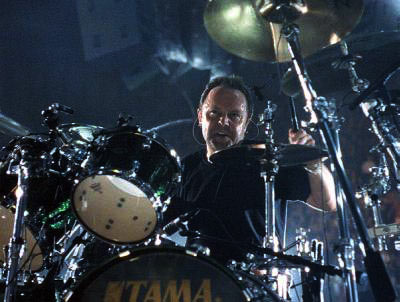
Between Metallica tours throughout the '90s, Ulrich kept himself busy forming his own record label, Music Company (via Elektra/Asylum) and jet setting with other rock stars as well as movie actors. In the late '90s, Ulrich received criticism from rock fans when he publicly spoke out against the mp3 file sharing internet server Napster, attempting to lend a hand in closing down the server by prohibiting Napster from including any Metallica songs - going as far as giving a list of Metallica fans who had downloaded songs of the group (which resulted in the ban of nearly 300,000 users from the service).
LARS ULRICH IMAGES
 |  |
 |  |
 |  |
 |  |
 |  |
 |  |
 |  |
Subscribe to:
Posts (Atom)


